
Written October, 2019

Immediately after Boot Camp we were bussed up to Camp Pendleton for 4 weeks of Infantry Training. Any marine who had a 2 year enlistment was certain to go to Viet Nam and go through training as a combat rifleman.

The Infantry Training Regiment was for learning about basic weapons and tactics, as well as all the other details of ground combat. But the prime goal was physical training targeted to get a marine to be able to move quickly on any terrain, in any weather, with 60-70 pounds of gear, weapons and ammunition. We thought Boot Camp was physically demanding but this was far more challenging. We crawled, walked, marched, climbed, and ran through every imaginable terrain except ice and snow.

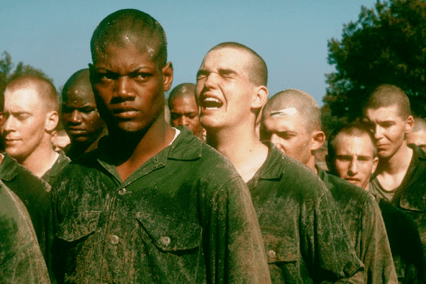
Every day was a challenge to stay in the game without collapsing.

It’s very difficult to remember any specific details other than constantly wishing for rest, food, and sleep. We were treated with a little more respect because we were now marines rather than recruits. It hardly compensated for the constant feelings of exhaustion, hunger and homesickness.
After the first couple of weeks we had a little more time off our feet for the multiple classes scheduled. We practiced on the various weapons that we were required to know and use. Sneaking short naps while the other marines were taking their turns on weapons was a cat and mouse game with the trainers.
The basic weapons are described below.
Hand grenades: for close combat to slow down an enemy assault and kill or wound as many as possible. It is also used to disable a fortified position or bunker or segment of a tunnel.

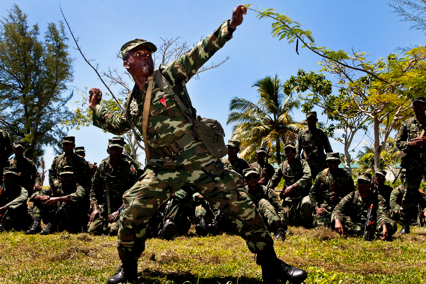
There is a pin to pull and when you throw it, the “spoon” pops off. The grenade will explode into hundreds of metal fragments in 4-6 seconds, (fragmentation grenade),
so you have to take cover quickly. When you pass the test with the “dummy” grenade you move on to throwing a live grenade.


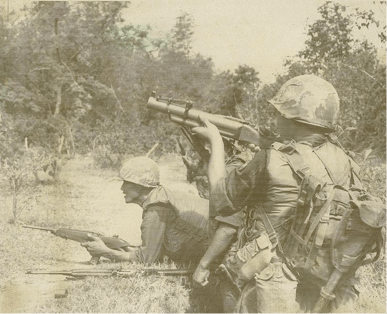
M79 Grenade launcher:
It is like a shotgun. A small grenade is loaded into the tube. When the weapon is fired it can send the grenade for a long distance.

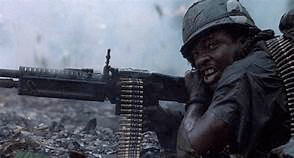
M60 Machine Gun:
This weapon is heavy and requires a team of 2 or 3 to help carry and feed the ammo. A good gunner can fire 100 rounds per minute. It kicks back hard and is deafening.
This is considered a specialty weapon. Most of us were given superficial training. For others, this became their prime combat weapon. The only hearing protection available to us for any of these weapons was to put your fingers in your ears.

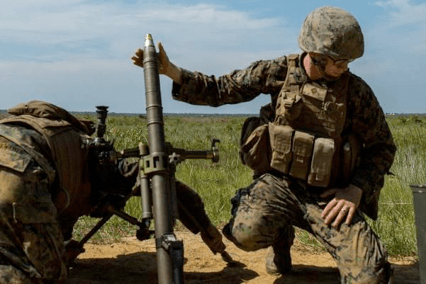
60mm Mortar: (Also a specialty weapon)
A mortar is a metal tube. An explosive shell is dropped into the tube and is launched long or short distances depending on how it is aimed. It requires a team of men to carry the tube, the base and the ammo. 60mm refers to the diameter of the shell.

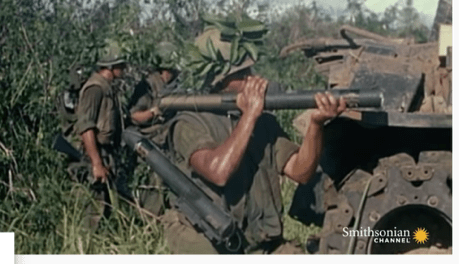
LAAW–Light Anti-Tank Assault Weapon:
We weren’t expecting to encounter enemy tanks in Vietnam but this rocket launcher was good against fortified positions. It had a collapsible tube and plastic materials. One man could carry several of them. It replaced the WW2 era Bazooka which was too heavy and bulky for jungle warfare.

Another phase of our training involved map and compass orienteering. We started with day time orienting drills. Two or three men were sent out with their own course to follow. There were specific map locations to pick up objects and return to the leaders. It was like a high stakes scavenger hunt. The next day we had to do it again. This time we went at night. We had to make our way back to the start point with proof of accurate travel. Many got lost and had to be found. Our team was very late and made it back well after midnight. We got chewed out for being so slow but we got a lot of “steps” in that night.

As we became more knowledgable as riflemen we started doing more live training with “war games”. Different platoons were divided up and a scenario was established with attackers and defenders or hunters and hunted. Our rifles were loaded with blank cartridges, meaning there is an audible gunshot but no bullet is ejected.
The cartridges were packed with wads of paper (instead of bullets) that could not penetrate the skin but would cause pain and scratches if fired in close quarters on to vulnerable areas.

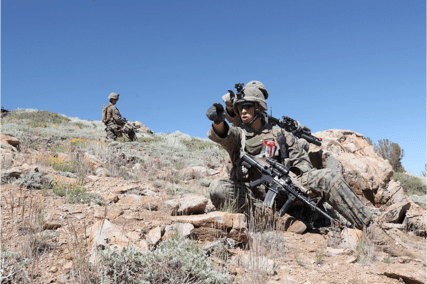
On my first mission I was on a “hunter” team looking for “enemy” forces in the mountains. I came around a large boulder and apprehended a “hunted” marine lying on the ground. He rolled on to his back and shot me in the face at close range. I was knocked on my ass with a spray of hot “spitballs” of paper. I was declared temporarily wounded by the referee and the hunted marine was chewed out for shooting me in the face and declared a prisoner.
The shooter was actually a friend. He apologized and we got over it.
The next mission was an overnighter. My team was assigned to find an enemy trail and set up a fighting position nearby and monitor the trail. I was very weak at digging holes in the hard ground and slept in a shallow fighting hole due to my incompetence. It was my first time “camping”. I enjoyed being out in the dark and seeing the stars and smelling the outdoors. This was the dawning of my interest in camping.
After these exercises we had classroom reviews on how to avoid the same mistakes we had made. We studied combat tactics and the functions of the radio and how to call for air strikes and artillery or Medical Evacuations. We learned First Aid and how to work with our Corpsmen, (medics).
Sometime, early in this 4 week training we got a weekend pass. George and I went to Anaheim/Disneyland by bus. Wearing our uniforms was required. We got a motel room and drank beer and ate pizza and M&Ms until we were sick. We had to find someone who could buy us the beer as we weren’t old enough to drink, (as opposed to being just the right age to get killed). After being confined to the base for 3 months without any freedom it felt like we were in the real world.
So we went to Disneyland, (which is clearly not related to the real world), and looked for a way to get in for free. We tried climbing a fence and bluffing our way through security. The place was impenetrable so we just hung around out front. Lucky for us some people felt sorry for us and gave us their extra tickets. We enjoyed going inside and being in the park. After 2 nights of this we took the long bus ride back to the base, back to the meat grinder.
The training was wrapping up with miscellaneous topics such as being encouraged to steal equipment and supplies from the Army and Navy because the Marine Corps was so poorly funded.
Somewhere between the end of boot camp and the beginning of infantry training, George and I had been pulled aside and offered the opportunity to go to Officer Candidate School. That would mean that we would go to Vietnam as Second Lieutenants and command a combat platoon of 30-40 marines. We both declined because it would mean extending the time on our enlistment. We also were aware that the casualty rate of 2nd Lieutenants in Vietnam was very high because they were targeted by snipers. Later on we were grateful for our decision for multiple reasons.
At the end of the first phase of the Infantry Training we had an informal “graduation” and were assigned our specific Military Occupational Specialty, MOS. This is given as a number. (03) was the basic code for infantry and then two numbers were attached to further define it. So someone assigned to 0311 would be a Basic Rifleman, 0321 Reconnaissance, 0331 Machine Gunner, 0341 Mortar Man, 0351 Anti Tank Assault Man. George got tagged for mortars and I got tagged for Anti Tank Assault. The next and final phase of training was beginning immediately. We were split up in terms of our training and housing but were able to see each other on weekends. The plan was to receive 4 weeks of intense training on the weapons and tactics of our specialty.
Our feeling of homesickness was intense. We were really looking forward to our 30 day leave in 4 weeks. It was the beginning of March,1968 and the news was full of reports of high American casualty rates in Vietnam. It seemed like all the news about Vietnam was bad. Americans had started to turn strongly against the war. Many of us were beginning to question our decision to volunteer for a war that might be declared a mistake. Nonetheless, our loyalty continued.
 thomasleecurran.com